
Automation has been a part of human history for centuries, from the pre-Industrial Revolution era to the present day. Concerns about automation’s impact on employment and the workforce have persisted throughout history.
In today’s fast-paced world, the future of work is undergoing a seismic shift, driven by technological progress. Automation, a buzzword in the tech-savvy era, has already reshaped various industries and is poised to continue its transformative journey. As robots and artificial intelligence (AI) gain prominence, it’s vital to grasp how these changes will reverberate throughout the job market and what steps we can take to adapt.
The Rise of Automation:
Automation, in essence, entails the utilization of technology to perform tasks previously handled by human hands. It encompasses the deployment of machines and computer software to streamline repetitive or labor-intensive processes. While the concept of automation has deep historical roots, it’s the recent technological breakthroughs that have truly supercharged its efficiency and widespread adoption.
Transforming Industries:
The impact of automation is no longer a distant concept; it’s happening now. To comprehend its real-world implications, let’s consider a few case studies:
Manufacturing Sector:
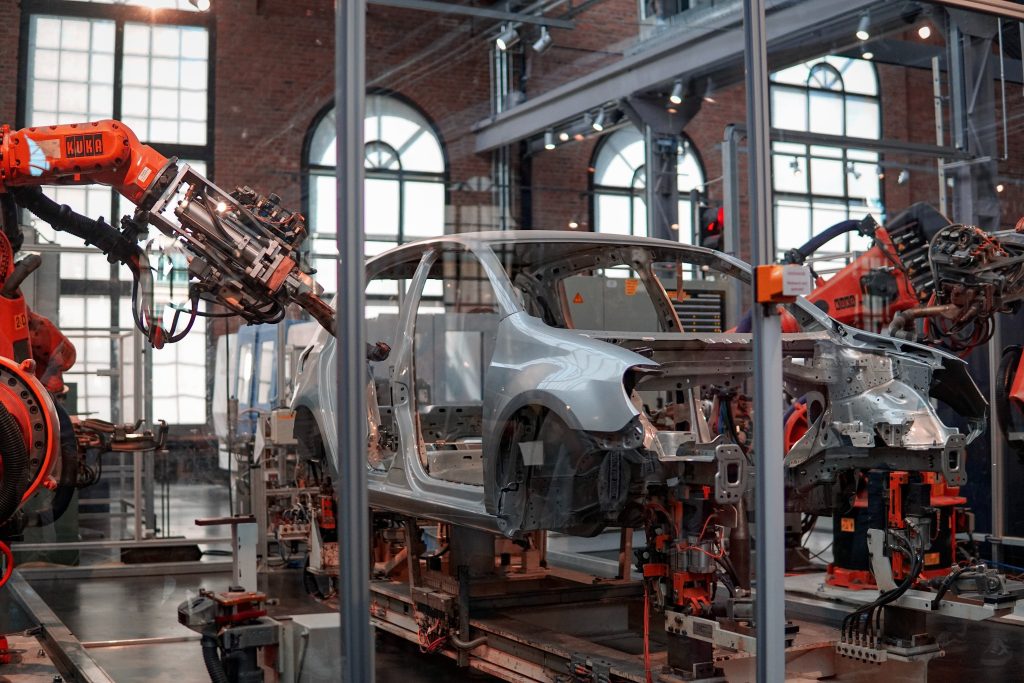
In the manufacturing industry, robots have revolutionized assembly lines. In automobile plants, for instance, robotic arms now handle tasks that once required human dexterity. As a result, production processes have become faster and more precise, increasing efficiency.
Retail and Customer Service:
In the realm of customer service, AI-powered chatbots and virtual assistants are becoming commonplace. They assist customers with inquiries and issues, offering 24/7 support. This automation not only enhances customer satisfaction but also reduces the need for round-the-clock human staffing.
Job Displacement and Emergence:
With the ascent of automation, it’s inevitable that some jobs will become redundant. However, this technological shift doesn’t spell doom for the job market. It’s more like a job market makeover:
Job Displacement:
- Studies show that automation may displace up to 30% of work activities, depending on various factors. However, not all these activities can be fully automated, mitigating the extent of job loss.
New Job Opportunities:
- Interestingly, the same automation that displaces some jobs also ushers in new ones. Some examples include roles in robotics maintenance and programming, AI trainers, and data analysts, which were scarcely seen a few decades ago.
The Impact of Automation:
– Automation, including artificial intelligence and robotics, offers substantial benefits, boosting productivity and economic growth.
– Approximately 60 percent of occupations contain work activities that could be automated, with new occupations emerging as a result.
– While half of all global work activities could theoretically be automated, the actual displacement rate by 2030 is estimated to be around 15 percent, varying by country.
– Demand for work could rise as economies grow, driven by factors like rising incomes, healthcare needs, and infrastructure investments.
– The future will require workforce transitions, with 3 to 14 percent of the global workforce (75 to 375 million workers) needing to switch occupational categories by 2030.
Income Polarization and Job Growth:
Automation’s impact on income polarization varies across countries. In advanced economies like the United States, high-wage occupations may grow, while middle-wage jobs decline. In contrast, emerging economies such as China are likely to see growth in middle-wage occupations. To ensure positive outcomes, policymakers and business leaders need to embrace automation’s benefits and address the challenges posed by worker transitions.
Creating New Jobs:
Research indicates that various trends and catalysts could create millions of new jobs by 2030. These trends include:
– Rising incomes and consumption, particularly in emerging economies, which could result in 300 to 365 million new jobs.
– Aging populations leading to increased demand for healthcare and related occupations, creating 80 to 130 million jobs.
– Investment in technology, driving growth in high-wage occupations like computer science and IT, potentially creating 20 to 50 million jobs.
Addressing Worker Transitions:
The question of whether there will be enough work in the future is a valid concern. Our analyses suggest that with economic growth, innovation, and investment, new job creation can offset automation’s impact. However, it is crucial to ensure that workers possess the necessary skills and support for transitioning to new roles. Failing to manage this transition could lead to rising unemployment and wage stagnation.
Conclusion:
Automation is transforming the workforce, offering opportunities for productivity growth and economic advancement. However, the impact on jobs is significant, requiring attention from policymakers and business leaders. By embracing automation’s benefits, addressing worker transitions, and fostering job creation, we can navigate the challenges and opportunities presented by automation in the coming decades.